
Is memcached.org scam or legitimate?
Final Verdict
In our opinion, based on the signals observed and publicly available information
🚨 Verdict
Verdict: Legit — Long-running official site of a widely used open‑source project, active releases in 2025, clean safety checks, and strong community presence.
📋 Executive Summary
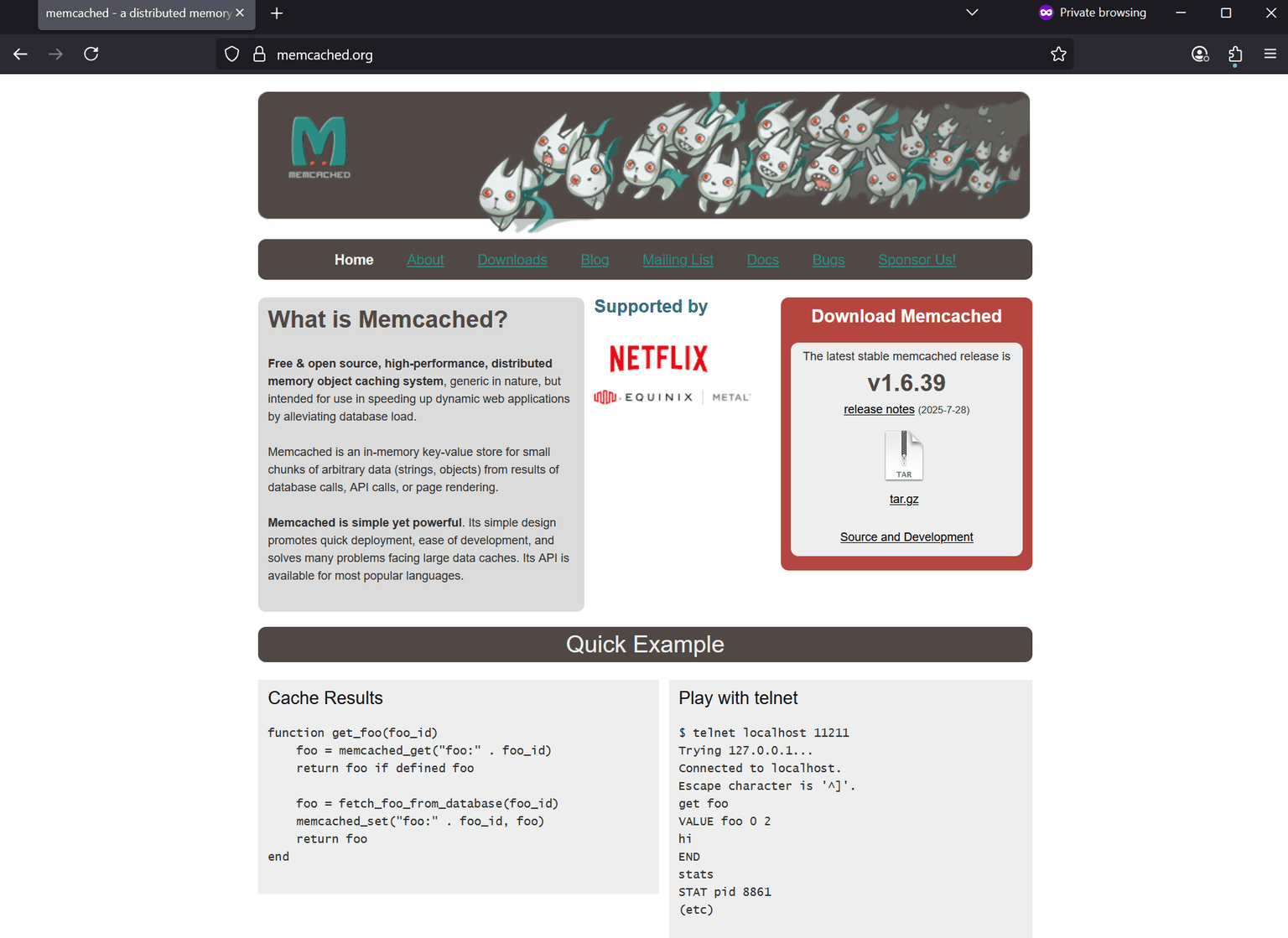
What it is: The official website for Memcached, a free, open‑source, high‑performance distributed in‑memory key‑value cache used to speed up dynamic web apps. The site hosts project info, docs, downloads, blog posts, and community links like mailing lists and chat.
✅ Good signs:
- 18+ years old domain (created 2006); many Wayback snapshots showing consistent use over time.
- Active development: latest stable release v1.6.39 dated 2025‑07‑28 clearly listed on site.
- Clean safety checks: not on malicious domain lists.
- Uses HTTPS with a valid TLS certificate (CN: memcached.org; Issuer CN: R13).
- Recognized and widely used across ecosystems (official GitHub repo, Docker image, Debian/Homebrew packages, extensive Stack Overflow/Reddit/HN discussions).
⚠️ Red flags:
- Direct tarball download instructions include an HTTP wget example (“wget http://memcached.org/latest”). While it likely redirects, using HTTPS explicitly is safer.
- No corporate address (normal for open‑source projects), so users should verify downloads and checksums.
🔍 Introduction
If you’re wondering “is memcached.org scam or legitimate?”, here’s a clear, up‑to‑date look based on site facts and recent community feedback.
🧾 What We Found
About the website:
- The site describes Memcached as a “free & open source, high‑performance, distributed memory object caching system” aimed at speeding up dynamic web apps by reducing database load. It provides quick examples, telnet interaction, docs, mailing list, and chat links. The homepage states the latest stable release is v1.6.39 with release notes dated 2025‑07‑28. The site is maintained by “Dormando,” a long‑time contributor. Homepage, About, Downloads, Blog.
- Contributors and project history are outlined on the About page, noting origin at LiveJournal in 2003 and listing core contributors. Downloads page includes install tips and a link to “releases,” plus a provided SHA1 for the tarball.
Website history:
- Wayback data shows first snapshot in 2007 and ongoing activity through 2025, with 3,755 total snapshots and steadily increasing frequency in recent years (notably high counts 2022–2025). This indicates long-term continuity, not a recently flipped domain.
- Technical checks show: domain age ~18 years; Registrar Gandi SAS (US); creation 2006‑10‑18; TLS certificate CN memcached.org, issuer “R13”. Malicious domain scan: 0 matches across 3 blacklists.
Legal stuff:
- Domain registration: Gandi SAS (US). Created 2006‑10‑18; updated 2025‑08‑20; expires 2025‑10‑18. This is typical for long‑lived open‑source projects that renew annually.
- The site is project‑run and does not list a corporate address (normal for FOSS). It invites participation via mailing list and chat, and mentions sponsorship (“Sponsor Us!” and “Cache Forge”).
What others say:
- Project code and releases are on the official GitHub repo, showing active maintenance and matching release series (1.6.x): Memcached GitHub, v1.6.39 release.
- Large, longstanding community presence:
- Stack Overflow “memcached” tag
- Reddit search for “memcached”
- Hacker News search
- Background/overview on Wikipedia
- Safety and reputation checks (no reports of scams found in recent search):
- VirusTotal domain report – typically shows no recent flags.
- URLVoid scan
- Google Safe Browsing status
- ICANN Lookup
- Historical presence via Wayback Machine
🤔 Should You Trust It?
Is memcached.org a scam? No. All signs point to a legitimate, official project website that has been stable for many years, with active releases in 2025, strong community adoption, and clean security reputation. The only caution is to prefer HTTPS and verify checksums when downloading source tarballs (as the site’s wget example uses HTTP and provides a SHA1).
🎯 Final Verdict
Verdict: Legit
Advice:
- Use HTTPS for downloads: replace “http” with “https” (for example, use https://memcached.org/downloads).
- Verify file integrity: use provided checksums and prefer stronger hashes (or download from the official GitHub releases page).
- Prefer your OS package manager or the official Docker image for installation.
- Avoid third‑party mirrors. Stick to the official site and the GitHub repo.
- For help, use the official Documentation/Wiki and mailing list.
- If running Memcached in production, don’t expose it directly to the internet; follow security best practices from official docs.
📚 References & Sources
- Official site: memcached.org
- About page: memcached.org/about
- Downloads page: memcached.org/downloads
- GitHub repository: github.com/memcached/memcached
- Documentation / Wiki: github.com/memcached/memcached/wiki
- Debian package: packages.debian.org/memcached
- Ubuntu packages search: packages.ubuntu.com/search?keywords=memcached
- Homebrew formula: formulae.brew.sh/formula/memcached
- Docker official image: hub.docker.com/_/memcached
- Wikipedia: en.wikipedia.org/wiki/Memcached
Last updated: 2025-09-07 17:10 UTC
Disclaimer: This analysis represents our opinion based on publicly available information and signals observed. It is provided for educational purposes only and is not intended to harm any individual or entity's reputation. Our verdicts reflect our assessment of available evidence, not definitive statements of fact. Contact admin@scamraven.com for corrections.