
Is pear.garden scam or legitimate?
Final Verdict
In our opinion, based on the signals observed and publicly available information
🚨 Verdict
Verdict: Legit — However, even thought it is not flagged as malicious and has 2+ years online, but it’s a high‑risk crypto trading dApp with privacy‑protected ownership and very limited independent user reviews.
📋 Executive Summary
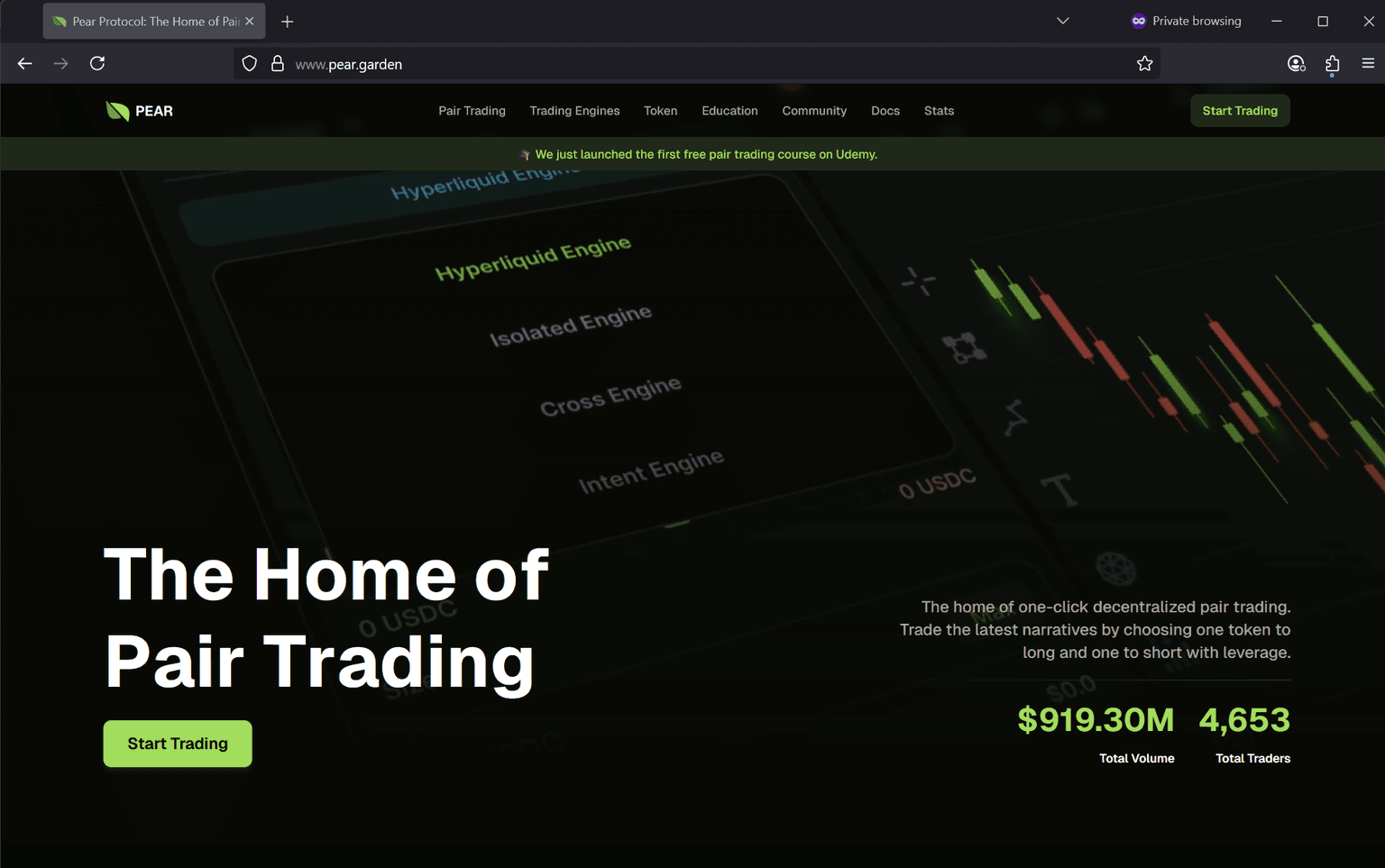
What it is: A decentralized crypto trading platform called “Pear Protocol” that focuses on “pair trading” (going long one token and short another with leverage). The site promotes “one‑click” pair trading, shows stats like “Total Volume” and “Total Traders,” and links to Education, Docs, and a free Udemy course.
✅ Good signs:
- Domain is about 2 years old; consistent activity since 2023 per web history
- Not found on the malware/blacklist sources
- Clear product description (pair trading) and educational content
- Valid HTTPS certificate for pear.garden
⚠️ Red flags:
- High‑risk financial product (leveraged crypto trading) with no visible regulatory/licensing details
- WHOIS privacy hides the owner; registrar is Namecheap with privacy proxy in Iceland
- Limited independent user reviews or third‑party listings; mostly self‑published info and social posts
- Potential token element and wallet interaction, which adds smart‑contract and approval risks
🔍 Introduction
This quick investigation asks: is pear.garden scam or legitimate? We review the on‑site facts, site history, and recent web chatter so you can decide with confidence.
🧾 What We Found
About the website:
- Branding: “Pear Protocol: The Home of Pair Trading.”
- What it offers: “One‑click decentralized pair trading.” Users choose one token to long and one to short, with leverage, aiming to profit from the relative performance between assets (example: long BTC, short ETH).
- Promos and education: The homepage repeats that they “just launched the first free pair trading course on Udemy.”
- UI elements: “Start Trading” calls to action, “Total Volume” and “Total Traders” counters (shown as dynamic/placeholder in the sample), examples with BTC and ETH pairs, and a note about “Multi chain pair trading.”
Website history:
- First seen on the Web (Wayback): 2023‑04‑13; last seen: 2025‑08‑12; total snapshots: 61 (2023: 11, 2024: 30, 2025: 20). This suggests ongoing updates/activity.
- Domain age: 2 years. Created 2023‑02‑07; expires 2026‑02‑07; last WHOIS update 2025‑01‑09.
- WHOIS: Registrar NAMECHEAP INC; ownership masked via “Privacy service provided by Withheld for Privacy ehf” (country: IS).
- TLS: Certificate CN is pear.garden; issuer “E6” (a common CA chain).
- Malware/blacklists: not malicious.
Legal stuff:
- WHOIS uses a privacy service, so the operating company and principals are not publicly listed.
- For a leveraged trading platform, the lack of clear regulatory status is a meaningful risk point, especially for users in countries with strict financial rules.
What others say:
- Social presence: The project appears active on X/Twitter at Pear Protocol on X.
- Community chatter: Reddit shows limited discussion so far (see searches: Reddit search: “pear.garden”, Reddit search: “Pear Protocol”).
🤔 Should You Trust It?
Is pear.garden a scam?
- We did not find it listed on the blacklists checked in the provided scan, and the site has been online and updated for over two years. That’s a good sign.
- However, this is a leveraged crypto trading dApp with no clear public company details or regulatory licensing noted in the sample. Independent user reviews are scarce. That combination means higher risk for regular users.
Bottom line: Not an obvious scam, but treat it as high‑risk and proceed carefully, especially if connecting a wallet or depositing funds.
🎯 Final Verdict
Verdict: Legit
Simple advice:
- Start small. Don’t risk money you can’t afford to lose.
- Do your own checks: read the Docs/Education on pear.garden and look for audits or transparency reports.
- Verify official links from the project’s X profile: Pear Protocol on X. Watch out for look‑alike domains.
- Use a fresh wallet with limited funds for testing. Revoke token approvals after use via a tool like Etherscan’s token approvals.
- Avoid leverage unless you fully understand the risks. Crypto and DeFi can be extremely volatile.
- If you need consumer protection or regulation, consider regulated platforms in your country instead.
📚 References & Sources
- Official site: pear.garden
- Project social: Pear Protocol on X
- Wayback Machine history: Web Archive snapshots of pear.garden
- WHOIS lookup (external reference): Whois.com record for pear.garden
Last updated: 2025-09-05 21:24 UTC
Disclaimer: This analysis represents our opinion based on publicly available information and signals observed. It is provided for educational purposes only and is not intended to harm any individual or entity's reputation. Our verdicts reflect our assessment of available evidence, not definitive statements of fact. Contact admin@scamraven.com for corrections.