
Is thinkific.com scam or legitimate?
Final Verdict
In our opinion, based on the signals observed and publicly available information
🚨 Verdict
Verdict: Legit — Long-running, well-known course platform with a 13-year-old domain, strong web history, and no blacklist flags. Mixed user reviews exist (common for large platforms), but no credible signs of a scam.
📋 Executive Summary
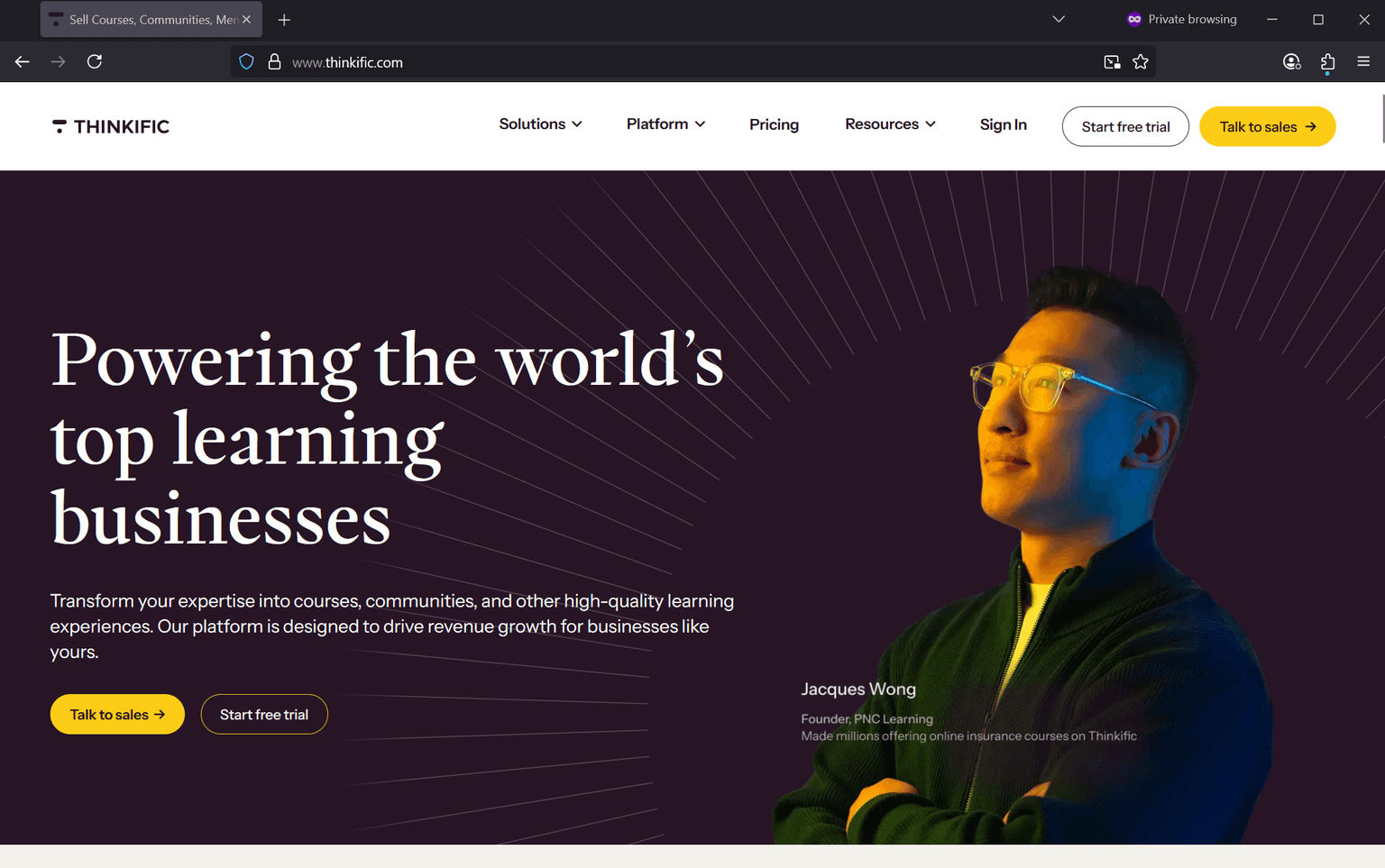
What it is: Thinkific is an online course platform (software-as-a-service) used by creators and businesses to build and sell courses, memberships, and digital products via hosted storefronts.
✅ Good signs:
- Domain is 13 years old and actively updated; thousands of archived snapshots show continuous operation.
- Not found on malicious domain lists; valid TLS certificate in place.
- Widely covered and reviewed on major platforms like G2 and Capterra; has a BBB profile and active community discussions.
- Recognized brand (Thinkific Labs Inc.), commonly referenced in e-learning industry resources.
⚠️ Red flags:
- Some user complaints about billing, refunds, account holds, and customer support response times.
- WHOIS privacy used (Domains By Proxy). This is common, but it does reduce public contact transparency at the domain level.
- As a marketplace-style host, course quality and seller behavior vary. Individual course sellers on Thinkific may run poor-quality offers—do your own checks before buying.
🔍 Introduction
Wondering is thinkific.com legitimate or scam? Here’s a simple, up-to-date look at the platform’s trust signals, history, and what real users are saying right now.
🧾 What We Found
About the website:
- Thinkific provides tools for creating and selling online courses and digital products. It’s a hosted platform where independent creators run their own course sites under the Thinkific system.
- As with any host for third-party sellers, your experience depends on the individual course creator. The platform itself provides infrastructure, payments, and support options.
Website history:
- Domain age: 13 years (creation date: 2012-03-30; registrar: GoDaddy.com, LLC; WHOIS privacy via Domains By Proxy, LLC).
- TLS certificate: Issued for thinkific.com; issuer “E6” (valid modern certificate chain).
- Wayback history shows long-standing activity since 2012 with heavy snapshot volume through 2025, indicating consistent operation and growth with total snapshots number being 11,266
- Malicious domain check: Not flagged as malicious.
Legal stuff:
- Thinkific is widely known as Thinkific Labs Inc., a Canadian e-learning software company. External sources note it as a publicly traded company in Canada, which adds accountability and visibility.
- Standard domain privacy is used at the registrar level (common among large brands). The site uses HTTPS with a valid certificate.
What others say:
- Review platforms:
- G2: Broadly positive recent reviews for ease of use and course delivery; some mention support/billing frustrations. See reviews at G2 — Thinkific.
- Trustpilot: Mixed reviews; positive experiences alongside complaints about refunds and service responsiveness. See Trustpilot — Thinkific.
- Consumer protection and risk checks:
- BBB profile exists with customer complaints (common for large SaaS).
- Community discussions:
- Reddit has active threads comparing Thinkific with Teachable/Kajabi and discussing pricing, payouts (via Stripe/Thinkific Payments), and support. See searches and threads: Reddit search: “Thinkific”.
- Company background/context:
- General company overview: Thinkific — Wikipedia.
- Platform status and incident history: Thinkific Status Page.
🤔 Should You Trust It?
Is thinkific.com a scam? No. All technical checks are clean, the domain has been active for over a decade, and it’s widely reviewed and discussed online. The platform is legitimate. The main risks come from:
- Individual course sellers (quality varies).
- Customer support or billing issues some users report.
🎯 Final Verdict
Verdict: Legit
Simple advice:
- Use the official site: thinkific.com. Beware of lookalike domains and fake support.
- Check the course creator: look for real names, LinkedIn profiles, sample lessons, and refund terms before paying.
- Pay safely: use credit cards or trusted payment methods; avoid wiring money or crypto for courses.
- If something feels off (pushy sales, “get rich quick” claims), step back. Search the seller’s name + “reviews” before buying.
📚 References & Sources
Last updated: 2025-09-05 21:18 UTC
Disclaimer: This analysis represents our opinion based on publicly available information and signals observed. It is provided for educational purposes only and is not intended to harm any individual or entity's reputation. Our verdicts reflect our assessment of available evidence, not definitive statements of fact. Contact admin@scamraven.com for corrections.